Who controls access to space — and why does it matter?
As satellite constellations expand, direct-to-device connectivity develops, and demand for Earth observation and space-based services grows, access to orbit is becoming an increasingly important strategic and commercial consideration.
But not all spaceports are created equal.
🌍 Geography, infrastructure, launch corridors, regulatory frameworks and national strategies all influence where satellites can be launched, at what cost, and under whose control.
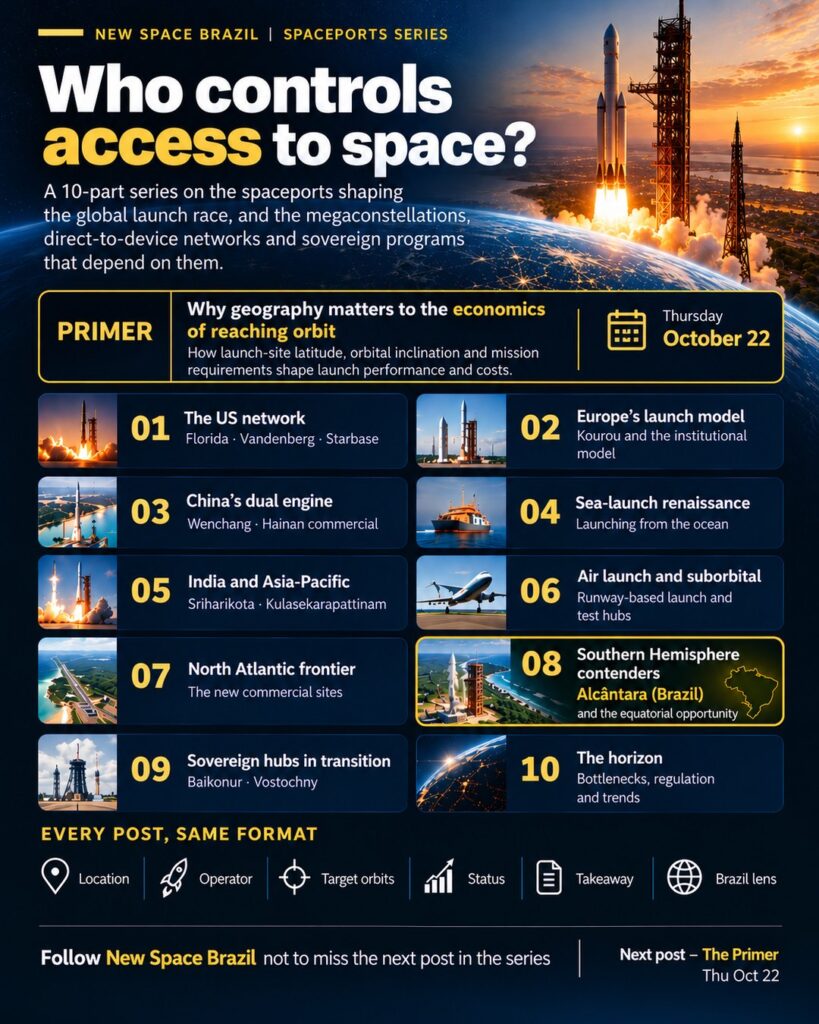
New Space Brazil is launching SPACEPORTS — a 10-part series exploring the infrastructure shaping the global launch industry.
From established launch hubs in the United States, Europe and Asia to emerging commercial facilities, sea-based launch platforms and Brazil’s strategically located Alcântara Launch Center, we will examine:
🔹 Where the world’s major and emerging spaceports are located.
🔹 Who operates them and which orbital markets they serve.
🔹 How geography, infrastructure and regulation affect their competitiveness.
🔹 What these developments mean for satellite operators, commercial applications and national space ambitions.
🇧🇷 Throughout the series, we will also consider the implications and opportunities for Brazil within the evolving global space economy.
📅 We begin on Thursday, October 22, with a Primer exploring how geography influences the economics of reaching orbit.
The series will then continue with two installments per week, every Monday and Thursday.
👉 Follow New Space Brazil to catch each installment and explore how access to space is shaping industries, economies and strategic capabilities worldwide.
Originally published on LinkedIn.