
INNOSPACE details SEBIT technical upgrades and flight success criteria in response to New Space Brazil
South Korean company explains findings from the first test flight, increased hybrid-engine thrust and revised flight-control systems. The upcoming mission will carry no payload and will prioritize technology validation.
23 November 2026 | New Space Brazil
South Korean aerospace company INNOSPACE has provided New Space Brazil with detailed technical iSouth Korean aerospace company INNOSPACE has provided New Space Brazil with detailed technical information about the upcoming second test flight of its SEBIT suborbital rocket, planned from Brazil’s Alcântara Launch Center in Maranhão.
In direct responses to questions submitted by New Space Brazil, the company explained the technical findings considered following the early termination of SEBIT’s first flight, the modifications subsequently introduced and the criteria that will be used to evaluate the next mission.
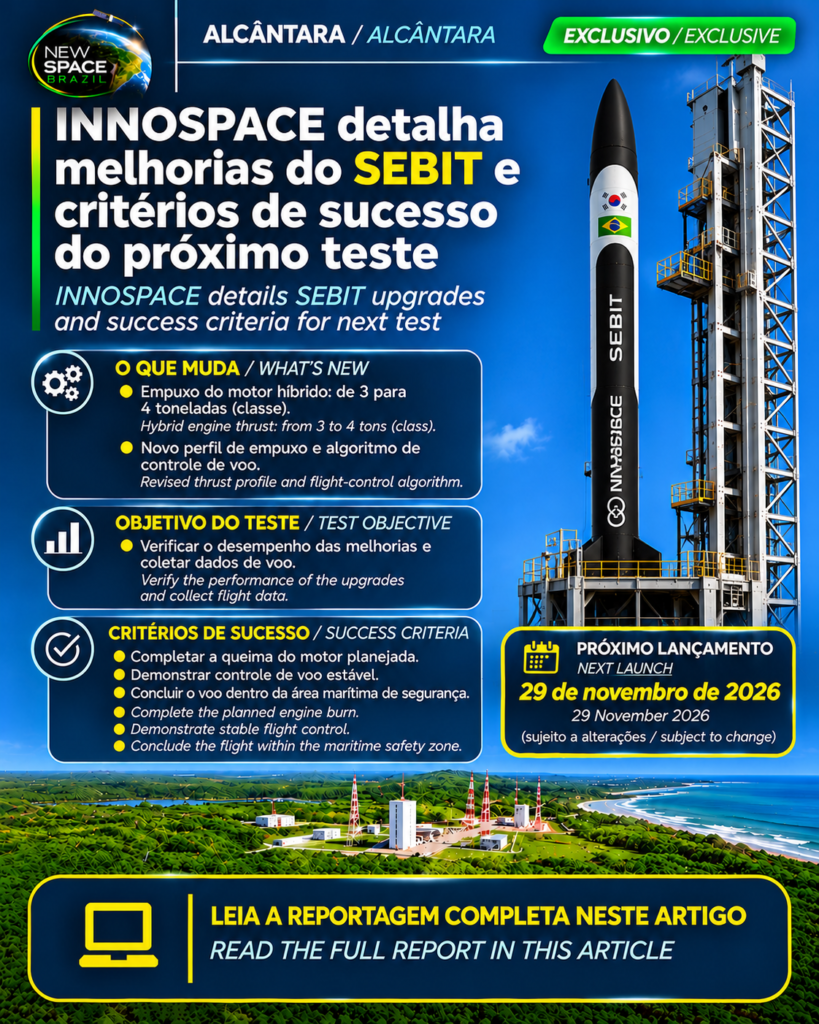
The principal changes include increasing the hybrid rocket engine’s thrust class from 3 tonnes to 4 tonnes, adjusting its thrust profile and improving the flight-control algorithm.
What did the first-flight investigation identify?
According to INNOSPACE, an investigation conducted by Brazil’s Aeronautical Accident Investigation and Prevention Center (CENIPA), in collaboration with the company, identified three important factors contributing to the early termination of the first SEBIT test flight:
- Flight stability during the initial low-speed phase;
- Acceleration performance immediately after liftoff;
- Vehicle flight control.
These findings informed corrective and preventive measures intended to improve flight stability and reliability.
INNOSPACE says the modifications have been verified through ground qualification tests and flight simulations. The upcoming mission will assess their performance under actual flight conditions.
Ground testing and simulations provide important evidence, but do not replace validation through flight data.
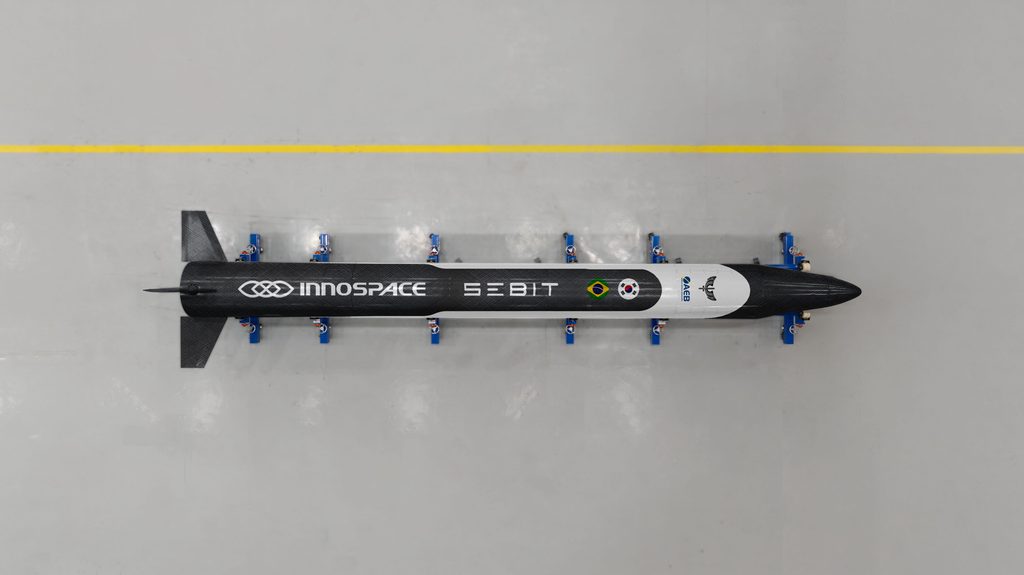
Hybrid-engine thrust increased from the 3-tonne to the 4-tonne class
One of the most significant modifications is the increase in the SEBIT hybrid engine’s thrust class.
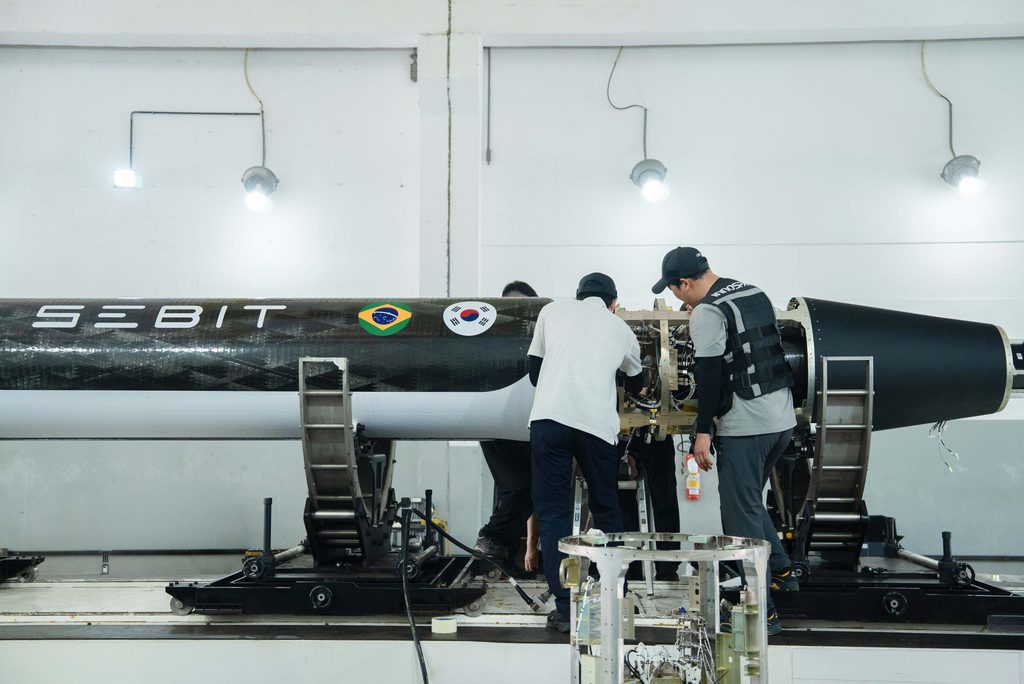
INNOSPACE confirmed that the engine has been upgraded from the 3-tonne to the 4-tonne thrust class. The thrust profile has also been adjusted, alongside improvements to the flight-control algorithm.
These modifications address the factors identified following the first test, particularly initial acceleration and vehicle stability.
The higher thrust class should not, however, be interpreted as a proportional increase in payload capability, as actual payload capacity depends on mission-specific requirements, including target altitude.
How will the next flight be assessed?
Responding to a specific question from New Space Brazil, INNOSPACE identified three criteria for evaluating the upcoming test:
- Engine burn: Completion of the planned propulsion burn.
- Flight control: Demonstration of stable flight control.
- Operational safety: Conclusion of the flight within the designated maritime safety zone.
The company considers these outcomes essential for confirming the effectiveness of its modifications and collecting data to support further development. INNOSPACE says it will share the flight results after the mission.
Designed for altitudes up to 100 km, but no test target disclosed
SEBIT is designed for suborbital missions at altitudes of up to 100 kilometres.
However, INNOSPACE clarified that reaching a particular altitude is not the primary objective of the upcoming test and that it is not disclosing a target altitude in advance. Instead, the mission will focus on propulsion and flight-control performance.
This distinction matters: the flight should be evaluated against the company’s stated technical objectives, rather than solely by the maximum altitude achieved.
No payload on the upcoming flight
INNOSPACE confirmed to New Space Brazil that the upcoming test will carry no experimental or commercial payload. The mission will focus on validating the vehicle’s modifications and collecting performance data.
INNOSPACE explained that SEBIT’s payload capacity depends on factors such as target altitude and mission requirements, and that the vehicle’s specifications for commercial operations will be determined as development progresses.
The path towards commercial operations
Even if the upcoming flight meets its objectives, INNOSPACE emphasizes that further testing, data analysis and accumulated operational experience will be necessary before the vehicle achieves the reliability required for commercial launch services.
Following the mission, the company intends to examine flight data, identify any areas requiring further improvement and continue refining its systems and operational procedures.
A successful test would therefore represent progress in SEBIT’s technological maturity, but would not, by itself, establish readiness for routine commercial operations.
What does this mean for Alcântara and Brazil?
Testing vehicles developed by international companies highlights Alcântara’s potential role as infrastructure for commercial and experimental space activities.
In SEBIT’s case, the collaboration with CENIPA described by INNOSPACE also illustrates the importance of Brazilian institutions in launch-related investigation and safety processes.
However, developing sustainable commercial activity will depend on more than an individual flight. Long-term progress will require operational continuity, infrastructure, an appropriate regulatory environment, participation by Brazilian companies and the development of specialized services.
For Brazil, the longer-term challenge is to translate the use of Alcântara into lasting industrial, technological and economic opportunities.
What comes next?
The target date for the next SEBIT flight is 29 November 2026.
New Space Brazil will continue following mission preparations, test results and subsequent developments.
About this report: The technical information was supplied directly by INNOSPACE’s Media Relations team in response to questions submitted by New Space Brazil and received on 23 November 2026.
Photo credit: INNOSPACE.